Showing posts with label Symptoms. Show all posts

Monday, May 20, 2019

Eliminate missed vaccination opportunities


Despite well-documented evidence regarding effectiveness and safety, overall adult vaccination rates in the United States fall short of national public health goals. Efforts to increase vaccine uptake have largely focused on reducing the number of so-called missed opportunities (eg, patients who visit health care providers without being vaccinated). All health care professionals, whether in public or private practice, should take advantage of every patient visit to ask about immunization history and provide patients with the recommended vaccines they need or refer them to providers who can offer the vaccines. While this may occur in some practices, I see missed opportunities all the time, particularly in speciality practices.
Whether it is the cardiologist who fails to recommend pneumococcal vaccination for their patient with cardiac disease or a physician in a tuberculosis clinic that doesn’t offer influenza vaccine —opportunities to make sure adults are immunized against vaccine-preventable diseases are being missed.
Paul Etkind, MPH, senior analyst for immunizations at the National Association of County and City Health Officials (NACCHO), said, “[While] it is not unusual for STD clinics to be offering HPV, Hepatitis B and Hepatitis A immunizations to their patients, it is more unusual for TB clinics to routinely offer flu and/or pneumonia vaccinations to their patients.” However, NACCHO supports the concept that rather than having TB clinics administer vaccines themselves, another possibility would be for TB clinic staff to routinely ask patients about their flu and pneumonia immunization histories and prompt the under- or unvaccinated patient to see their primary care provider or local health department to receive the appropriate immunization(s).

Tropical Medicine Congress | Tropical Medicine Conference | Infectious Diseases Conference | Tropical Medicine Meetings | Infectious Diseases Congress | Infectious Diseases Meetings


The ultimate goal is to have every patient fully immunized, and that includes the entire array of vaccines recommended for adults by the CDC’s Advisory Committee on Immunization Practices: influenza, pneumococcal, Tdap, shingles, hepatitis B, hepatitis A and HPV. Achieving this goal will require the involvement of all health care professionals in both private and public health venues. And I challenge you to help meet this public health goal by leaving no opportunity behind.
Source:https://www.healio.com

Tuesday, May 14, 2019

Infectious Diseases Conference 2019

MEASLES OUTBREAKS: REINFORCING THE IMPORTANCE OF NATIONAL INFANT IMMUNIZATION WEEK


The Centers for Disease Control and Prevention (CDC) has designated April 27-May 4, 2019 as National Infant Immunization Week (NIIW), an annual observance highlighting the importance of protecting infants against vaccine-preventable diseases. 2019 marks the 25th anniversary of NIIW and celebrates the impact of vaccines on improving public health. The more than 600 confirmed cases of measles in 22 states between January and April 2019 serve as a stark reminder of the need to collectively raise our voices in support of childhood vaccination.
Vaccinating young children on time is the best way to protect them against 14 serious and potentially deadly diseases before their second birthday. For children born between 1994 and 2018, vaccination will prevent an estimated 419 million illnesses, 26.8 million hospitalizations, and 936,000 deaths in their lifetimes. When parents choose not to vaccinate, or to follow a delayed vaccination schedule, children are left unprotected against diseases that can still circulate in the US, including measles and whooping cough. 


Tropical Medicine Congress | Tropical Medicine Conference | Infectious Diseases Conference | Tropical Medicine Meetings | Infectious Diseases Congress | Infectious Diseases Meetings

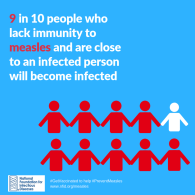
9 in 10
Measles is one of the most contagious infectious diseases and may be associated with severe side effects including major neurologic damage, or even death. As the number of unvaccinated, susceptible children increase, the risk of an epidemic grows rapidly and is a real threat to all at-risk groups. The total number of confirmed cases of measles in the US in 2019 is estimated to be the largest since measles was eliminated in the US in 2000.
When the overwhelming majority of children are vaccinated as recommended, those few who are susceptible to serious medical diseases are much safer, a concept referred to as ‘herd immunity’ or ‘community immunity.’ As the pool of unvaccinated children increases, community immunity declines, which can pose a tragic and unnecessary threat to many children (and adults) who cannot be protected through vaccination.

Tropical Medicine Congress | Tropical Medicine Conference | Infectious Diseases Conference | Tropical Medicine Meetings | Infectious Diseases Congress | Infectious Diseases Meetings

multi-ivax2protect
Measles is still commonly transmitted in many parts of the world. Globally, nearly 10 million individuals get measles and about 134,200, mostly children, die from the disease each year. Despite the national measles, mumps, and rubella (MMR) vaccination coverage level of about 92%, one in 12 children in the US does not receive the first dose of MMR vaccine on time, underscoring measles susceptibility across the country. Vaccination coverage continues to vary by state from 84% in some states to 97% in others. At the county or local levels, vaccine coverage rates may also vary considerably and pockets of unvaccinated individuals can exist even in states with high vaccination rates.
What can you do to prevent measles?
  • Healthcare professionals (HCPs) must strongly recommend MMR vaccination to their patients
  • Children should get two doses of MMR vaccine, starting with the first dose at age 12 to 15 months, and the second dose at age 4 through 6 years
  • Adults should review their own vaccination history and get an MMR booster vaccine if they are unsure about past vaccination or immunity
  • All individuals travelling outside the US should consult with an HCP about recommended vaccines, including MMR 
Tropical Medicine Congress | Tropical Medicine Conference | Infectious Diseases Conference | Tropical Medicine Meetings | Infectious Diseases Congress | Infectious Diseases Meetings
  • Despite a national #MMR #vaccination coverage of nearly 92%, 1 in 12 children in the US does not receive the first dose of MMR #vaccine on time 
  • Before the #chickenpox #vaccine was available, ~50 children died and more than 7,000 were hospitalized each year in the US 
  • #Pneumococcal #vaccines have helped lower the estimated number of cases of invasive pneumococcal disease in young children by almost 90%#PreventPneumo
  • For children born between 1994-2018, #vaccination will prevent an estimated 419M illnesses, 26.8M hospitalizations, & 936,000 deaths in their lifetimes 
Source: https://nfid.wordpress.com

Monday, May 13, 2019

Infectious Diseases Conference 2019

Facts about flu

Tropical Medicine Congress | Tropical Medicine Conference | Infectious Diseases Conference | Tropical Medicine Meetings | Infectious Diseases Congress | Infectious Diseases Meetings


What are the symptoms? 
Common clinical symptoms for both influenza A and B may present with sudden onset of fever, cough, sore throat, myalgia/myositis, fatigue, and gastrointestinal (GI) presentations such as vomiting and diarrhoea. Fever is more common in children than in adults. Although clinical presentations are indistinguishable between influenza A and B infections, some studies report differences by age groups. Influenza A tends to cause more severe illness, although influenza B can be severe in children. In adults, influenza B infections more frequently present with vomiting, diarrhoea, abdominal pain, headache, general weakness and rhinorrhoea compared to influenza A. It was found that cases with influenza B infection presented more with upper respiratory tract infections, myosotis and gastroenteritis compared to influenza A in children. Without a test, however, you cannot prove influenza infection, as there are over 90 other cold and cough viruses which circulate in winter.  However, when an epidemic of flu is occurring, flu-like illness is more likely to be flu.
How does it spread?  
Influenza infection can be transmitted through droplets, aerosol and direct contact with the infected person. Whilst droplet is the main mode of spread, numerous studies have documented airborne transmission. In one US study, viable influenza virus was detected in the air of the emergency department 3 hours after the infected patient had left.
Who is affected?  
Influenza infects all ages, with peaks at the extremes of age – the very old and the very young. In 2017 the peak has been in older adults >80 years and over and children 5-9 years.  Males and females are equally affected. Up to a quarter of people can get infected in a severe epidemic.
What are the complications? 
Influenza can result in primary viral pneumonia, which occurs early in the course of illness, or secondary bacterial pneumonia, with onset later (1-2 weeks after initial symptoms). Bacterial pneumonia is the most common influenza-associated complication, especially in children and the elderly. Bacterial infection can be complicated by antibiotic resistance and there is are vaccines available for the most common bacterial complication, pneumococcal infection. Unfortunately, despite being provided free to people over 65 years and other risk groups, rates of vaccination against pneumonia are low. Other complications can be worsening of asthma and respiratory diseases and exacerbation of underlying comorbidities in persons who are at risk of the infection. Heart failure, precipitation of heart attacks and sinusitis may also occur. Occasionally encephalitis and complications of other organ systems may occur.
Influenza vaccine: 
Primary prevention is with vaccination with influenza vaccine annually. The mutation of the virus year to year requires annual vaccination. The vaccine is safe and effective, but effectiveness can vary depending on how well the vaccine is matched to circulating strains. People aged 65 years and over, and those with medical or other risk factors are recommended and funded for a free vaccine in Australia. The quadrivalent vaccine, introduced in 2016, allows protection against four strains, which gives better effectiveness against flu.  Research is underway for a universal flu vaccine which will remove the need for an annual jab.
Other prevention & control measures: 
Neuraminidase inhibitors (NAIs) can be used as prophylaxis or treatment, and when used as prophylaxis can curtail outbreaks.  Cough etiquette, hand hygiene and infection control measures are also vital to prevent further spread of infection. Personal protective equipment such as masks is recommended for healthcare workers. Guidelines recommend “droplet precautions” for seasonal influenza, however, airborne transmissions well documented for influenza.